Saturday, September 27, 2014

Dad

We came down in the morning to crumbs on a plate
and a type-written letter praising us for being good.
It was signed in a scrawl we only saw once a year,
spindly and tall with curlicues on the “S” and “A”
that we knew were not from our mother’s even hand. 
Somehow we were unconcerned that he had had been
watching us to be sure we behaved, were deserving.

There were footprints on the hearth, the deep ruts
of men’s work boots imprinted on a pile of spilled ash.
I believed much longer than I should have, convinced
he wouldn’t go to so much trouble to sign the gift tags,
to shake ash on the hearth and step into it with careful
heavy feet, and hide carrot tops in a bowl on the roof
to discover when cleaning the gutters months later.

That streak of magic that no one expected made us so
easy to fool.  I drank up every bit of proof that it was real.
Yet when I finally accepted the he behind it all, there was
no disappointment, just the low, blue flame of wonder
at the efforts of that distant man, incapable of deceit,
who had been watching us year after year, his three

good girls, finding a way to tell us we were deserving.

Thursday, September 4, 2014

Trees to Hide the Horror


In the steaming Shanghai morning, my boss leans over in the cab
as we wind through layers of highway stacked throughout the city,
past dizzying round towers and crumbling concrete, over the river
whose mottled water is full of ships and slicks like a child’s finished bath.
“When foreign officers came to visit,” he says, “Mao would plant trees
to hide how thin the people looked, how poor and broken the land.”

Later that day, on the broad bright highway in Shaanxi, we drive by
dozens of white billboards casting shadows on the powdered earth.
GIVE FULL SUPPORT FOR SUCCESS OF SAMSUNG PROJECT! 
ACCELERATE XI’AN’S TREMENDOUS DEVELOPMENT!
Shining factories and fabs rise from the plain like high-tech mirages,
enticing wanderers with their promise of vast, deranged progress.

We stop at the high arched gates separating Xi’an’s commercial zones.
The sun is relentless.  Men and women crouch in the soil by the road,
chipping at the wiry weeds, shifting the landscape to one of lushness
and prosperity.  In the distance, dozens of half-done concrete towers
loom over the plain, ready to house the workers who will pour in
from the provinces.  My boss leaves the van and snaps endless photos.

That night we eat rice-crusted short ribs in a theater where the actors
blow fire from behind green and gold masks.  Poised at the curtain,
the silks of their costumes changes like magic, red to purple and blue,
but I see the stagehand snatching the garments off from behind,
layer by layer.  I think of trees in trucks, forests razed here and raised

there, factories built and words printed with sheaves of paper money.

Saturday, July 26, 2014

Kamaishi Seashore Song


As the ground stilled, stunned
the water receded. 

Above the sirens
and gnashing of roofs

into walls,  
her voice,  I breathed. 

I’m not
a young man.

The shore bowed
with an artist’s deference

and the wall behind her
opened like a mouth.

Orpheus shaking
in a wet underworld,

I lifted her,
heavy on my back

when I expected
lightness.

Throat to my ear,
she hummed the song

and I climbed
as the town became shore,

I climbed
and she became weightless,

I climbed
bearing the song that contained both our lives,

I climbed
as water roared like applause, rising like an an audience on its feet.

Wednesday, April 2, 2014

Blanc de Blancs

Against their advice, I bought a jasmine bush
from the highway nursery, the air jungle-wet and chemical.

I drove it to my sister's to pot it with bagged soil
and installed it at the base of my single kitchen window.

My imaginary garden filled the room as I slept,
but it didn't take root, the leaves turned ashy, brittle.

I slid the window open, wedged the pot against the sill
to trick the bush into believing it was outdoors.

The bottle was an afterthought, wrapped in pink cellophane,
embossed.  I bought it for the name, an elegant hyperbole.

I displayed it on the counter, expecting it to light the room
as leaves dropped off the dying plant that half-leaned out the window.

Queen of my castle.  The bottle I saved until Christmas, by then
the jasmine was a film of dust, a few scratches on the sill.


Wednesday, March 12, 2014

I Love You a Million

When I miss you
I trace your messages back,

especially the last ones,
uncorked bottles

polished clean by the river
of your love.

Only a few
plucked from the water

among scores
bobbing out to sea.

We knew it was big,
we inheritors, we lucky ones,

but for all it contained
how big was your heart?


Sunday, March 2, 2014

The Next World


"Every morning the world is created."- Mary Oliver
"Yes but by whom? Who let me start over one more time?"- John C. Morrison

I think about it
every night,

staring at the stairwell
lit in the facing building,

who is next,
what is the next world

to which
I'll say good-bye.

It's luck,
the inhale of day,

exhale of stars,
a roulette wheel

whirling
as we sleep.

Here's the secret:
it's not only

in the morning
the world is created,

not only at night
that it's taken away.

Don't call it God,
this purr

of a gun barrel
spinning.

Some wake
to silent children,

a cracked
foundation.

Some look up
to see a hole

where the sun
shines through,

burning a ring
on the old oak floor.


Saturday, January 11, 2014

Making Room


For Abilene

In the middle of the worst time,
my mother told me, “I choose life.”

I don’t remember much from then,
but when you began, little one,

something thawed inside me. 
My heart grew with you,

forced to stretch wide enough
for joy to sit alongside grief.

The day you were born I held you
until my arms went numb,

until I understood the need
for the world to make room.

You don’t choose life,
eventually it comes to claim you. 

The rest  is a frozen stream
just before springtime,

the trough of a wave, 
an exhale.

Monday, November 11, 2013

On Being Married


Since we’ve been back from our honeymoon, I’ve enjoyed catching up with friends and colleagues, and the question is frequently posed, “How does it feel to be married?”  The honest answer is, it doesn’t feel much different than engaged life.  There was a part of me that was hoping to feel something magic and transcendent, but I have the same love and affinity for this kind, patient man than I did before.

Maybe they didn’t occur on the wedding day, but there were moments of transformation, situations that boosted us onto the next echelon of intimacy and understanding.  Helping him drink his juice as he came out of anesthetic, how he sat with me on the worst night of my life and swore he would be there for me and my inside-out heart, and all the nights that followed where grief made me do and think and say things I didn’t mean, but he kept his word.

I loved our wedding, every minute of it, and by the time it came, it was easy.  It was easy to put on a dress and say, I do, I will, I take you as you are.  The sacred and difficult work came before, the work of existing together in a studio apartment, the rhythm of meals, bills, and laundry, of mending childhood scars, turning anger into grace and learning.

And there is so much to learn.  I often have an achy back and shoulders from my desk job, and he is often willing to work out the knots.  One time he said he could tell they were feeling worse, and I asked him how he knew.

“Sarah,” he said, “I know every inch of your back.”

We map each other over time; the safe paths, the weak planks in the bridge, and the rivers prone to overflowing.  Learning the topography of these secret valleys is more binding than any certificate or gold band, more intimate than sharing a name.

I was expecting our wedding to be a revelation, and I suppose in some ways it was.  It was a chance to share my love with a person who has my back in the most literal way possible, a chance look into the eyes of our family and show them the map we’ve drawn, the work we’ve done, not one flesh but two people standing so close there is no space between them. 

Monday, April 29, 2013

The Story of Her


When my friends told my now-fiancé that I wasn’t always so contentious, so careful, he was surprised.  After all, he met me in graduate school, when I was twenty-four and already a stepmom.  A few years prior, he would have met a different person who lived with more immediacy and took things less to heart.  Those years between collage and finishing graduate school were transformative in many ways, but most of all because of her.

The story of my ex is less relevant to this story, and not very compelling.  After living abroad, I moved back to the US and was hired a sportswear company where I enjoyed being the only girl, and fit in well with the work hard, play hard culture.  We worked long hours, drank freely, and only two of us were single, so our relationship began as more of a statistical probability than a true romance.

From the beginning, though, it was all about her.  The custody handoffs between him and his ex frequently took place at the office, so their four-year-old daughter was often there, strutting around, all sass and tiny denim skirts and swishing dark hair.  Even with the immature, addled brain of a 23-year-old, I remember thinking, for the sake of this tiny, lovely person let’s try to get this right.

Dating someone with a child is a spectacularly humbling gig.  Already loving the child’s parent, you may feel a bond and sense of affinity towards the child, but there is no guarantee they will reciprocate.  Adults have the cognizance to hide their angst from failed relationships, but a child’s negative experiences with their parent’s divorce or earlier partners will be projected directly onto you.

Her dad had just gotten out of a long-term, live-in relationship, and for the first six months she literally didn’t speak to me.  I spoke to her a lot; we had entire one-sided conversations about songs, what the three of us were going to do that day, and what was for lunch.  I bought her new outfits, learned all the words to the three High School Musical movies and the pantheon of Taylor Swift songs, and finished her leftover chicken nuggets.  

Eventually she came around. The upside of being a stepparent is that if the child ends up liking you, it’s a hard-won privilege.  The adult may have oxycontin running in their veins facilitating bonding, but you really have to earn a child’s trust.  That makes it even more rewarding if you do.  Smiles and acknowledgement were like tiny ribbons of success, and the first “I love you” card she made me was like a little piece of alchemy. 

Having never established a real adult routine, I quickly adopted theirs, and after a hectic early-twenties, I loved the predictability and structure of a suburban family existence.  I loved it so much that I ignored a series of red flags about my relationship with her dad and instead implicated myself further in their life.  

About a year into our relationship, the start-up folded and we found ourselves jobless.  To save money, I gave up my apartment and moved into his townhouse.  I found a new job, started graduate school, and worked myself senseless to provide for my newfound dependant.  In the evenings I fixed her carrots and apple slices, played board games, and made endless crafts.  Strangers sometimes mistook me for her real parent as I gave her a ski lesson, piggy-backed her through a fun-run, or studied for grad school exams while waiting in line to see Santa, and while she already had a great mom, deep down I felt grateful for their validation of the motherly role I was trying to play.

There is a dark side.  Regardless of how deeply you love the child, your views on parenting and discipline will always be subverted and your access to the child is wholly dependent on the biological parent.  Cracks appeared in his carefully honed mask of integrity.  Our parenting views differed on everything from money to nutrition to discipline, which became more evident as she grew older and required more of each.  Eventually his duplicity reached a tipping point where I was faced with dual imperatives: stay out of love and duty to his child, or save myself. 

After months of reckoning and full of guilt, I chose the latter.  He reciprocated by cutting off my access to her entirely.  After three years, it had all evaporated.  The grief was stunning, like someone had removed my lungs and replaced them with gills.  It’s a lonely, conflicting experience, because though logically you know you have no claim to the child, your body and your heart never quite catch up.

Three years on, he hasn’t changed, but by all accounts she is doing fine.  Like a particularly potent drug, grief has an awfully long half-life.  I still have every card and piece of artwork she ever made me, and when I see her out with her dad at gatherings of mutual friends, I tear up but don’t fall to pieces.  I put my lessons learned in my back pocket for next time— I know I am capable of that kind of love, tenderness, and responsibility, and I know what kind of parent I want to be.  As for her, it can’t hurt to have one more person in the world that loves her indefinitely from afar.

Wednesday, March 13, 2013

Dreams


A few weeks ago, a friend posted a link on Facebook to a Flickr account titled, "The Faces of Addiction."  After scanning a few photos, I became so captivated that I spent an hour scanning every image in turn.

Chris Arnade is a Wall Street banker and father, who in is spare time (where does he find the energy?) traverses the streets of Hunts Point, Bronx photographing and interviewing the neighborhood's residents, many of whom are on the spectrum of addiction and homelessness.


Their stories are all unique, but tangled around common and tricky themes of violence, victimization, children living elsewhere, and the interdependent cycles of prostitution and drug abuse.  

Along with the somber realities of their lives, Mr. Arnade asks the Hunts Point residents about their dreams.  One answer in particular struck me- that of a Michael, who squats in an abandoned building and cross-dresses to engage in survival sex to support his heroin habit.


“I am sick of this life. Sick of jamming needles into myself, sick of not having a home, sick of all my money going to dope, sick of waking up and needing drugs. I just want a normal life. I want to have a home and watch movies.”

I have never struggled with addiction or housing insecurity, but through the lens of other experiences I found Michael's dream to be wholly relatable.  What more could we want than a place to sit quietly and without suffering, and something to take our minds off the day?

These days, I am grateful for every moment that seems normal, boring even.  Healthy hands to do the dishes, a job that's safe if not stellar, and walls I own.  Not to be reductive, but does there need to be more?

I admire for Mr. Arnade's pastime.  Far from exploiting this vulnerable population, his profiles are sympathetic and humanizing.  He explains that his photography habit helps him unwind from the stress of his job-- and as difficult as I'm sure some of the interviews are, I understand.  It doesn't need to be so complicated.  What is money, trade, bonds and securities, compared to security, normalcy, home.


Monday, January 28, 2013

Spell


This year I have felt like I was under a spell—a spell of fatigue, grief, and anger.  Feeling this way has got me thinking about other kinds of spells, in the fairytale sense.  Young women unwittingly find danger, with poisoned apples, enchanted spinning needles, and devious witches disrupting their lives and punishing them for their daring hope.

Rapunzel lived in a tower until the age of twelve, when a prince came to rescue and marry her.  She could nearly taste her freedom, but she was found out and banished to live “in a place of misery and want,” while her intended was struck blind.

As a child, Snow White evoked the envy of the “godless” queen.  After numerous foiled attempts, the queen finally tricked Snow White into eating the poisoned apple, after which she fell dead while remaining flawless and cold in her glass coffin.

At birth, Princess Rosamond was cursed to prick her finger and sleep for a century.  Through she grew up lucky and adored, at fifteen she wandered through the castle and fell upon a sewing spindle, collapsing into a deep sleep that “fell upon the whole castle.” 

What lesson do we learn from these parables— that that the reward for youth and hope is trickery and suffering?  In 2013, girls don’t aren’t hurt by spinning needles or jealous witches, but what are anxiety, depression, grief, and abuse if not spells, bewitching forces that render us trapped, silent, and still.

After years of wandering, Rapunzel’s blinded husband found her.  Her tears healed him, and he saved her from a life of misery and suffering.

A prince barters with Snow White’s dwarves to take her coffin away on his carriage, and the ride jolts her, so that the apple dislodges and she awakes to his proposal.

Another prince finally makes it alive through the tangle of briars to kiss Princess Rosamond, breaking the spell and awaking her from her sleep.

But what if a man doesn’t break the spell?  What if the prince is there, and very kind, but the fog remains, stubbornly shading you from happiness and well-being?

It helps knowing who the enemy is.  It isn’t the patient man at your side, it isn’t the girl you miss like a second heartbeat, and it isn’t the people who want so much to help you.  It is something other, something outside yet deep within that you don’t own, but has been done to you.

One night I tried to wrap words around it. “I’m tired of feeling so angry.”  The fog thinned slightly lifted with a simple admission.  That night we went to a show, and the music jolted the apple slightly. 

Relief isn’t a grand moment of awakening, the spell breaking in one deft crack.  It takes a thousand tiny steps of honesty, song, tears, pages, hope, faith, running away, waking up, and coming back to save yourself.

Tuesday, December 11, 2012

Pieta


 Pieta by William Adolphe Bouguereau

We expect so much from each spring,
ice shelves to tumble, arms to shed jackets,
waves to lead in familiar tides—
breath catches, such astonishing love.

Before words, all we have is the body,
world narrowing to a tiny stream,
waking and rest, open mouths and satiety,
easing them through the early quiet days.

This is all we should know—waves
bringing life towards us, small roots
deepening, arms unfurling, as our tide
recedes, brittle and simple as winter.

We cannot expect the unnatural cadence
of easing them through the last quiet days,
slipping the jacket from their arms
to draw around us, breathing the fabric,

or worse, it comes in a sudden surge of ice.
After words, all we have is the body,
familiar and lonely  like a hollow tree. 
Tide stills, frozen water, fathomless grief.

Tuesday, October 16, 2012

City Mouse, Country Mouse

The last couple months have yielded many opportunities for travel, both for work and for play, here and abroad, to cities and more rural locales.  I had the chance to catch up with wonderful friends and have some solitary time as well.

I started out with some "country" destinations.  First Iowa, where the sunny fields were absolutely beautiful and calming to walk amongst with my much-adored Kelsey.


Then onto Bainbridge Island for the Harvest Festival, which was an idyllic, wholesome event with cider pressing, sheep shearing, and what seemed like the entire island in attendance.


This whole summer, being outside was the only time I felt semi-normal and like I could breathe.  The next round of trips though, were to cities-- familiar and new.

First came Boston,  (well I only spent a few hours in Boston proper, for the rest I was in the much less glamorous Woburn, MA)


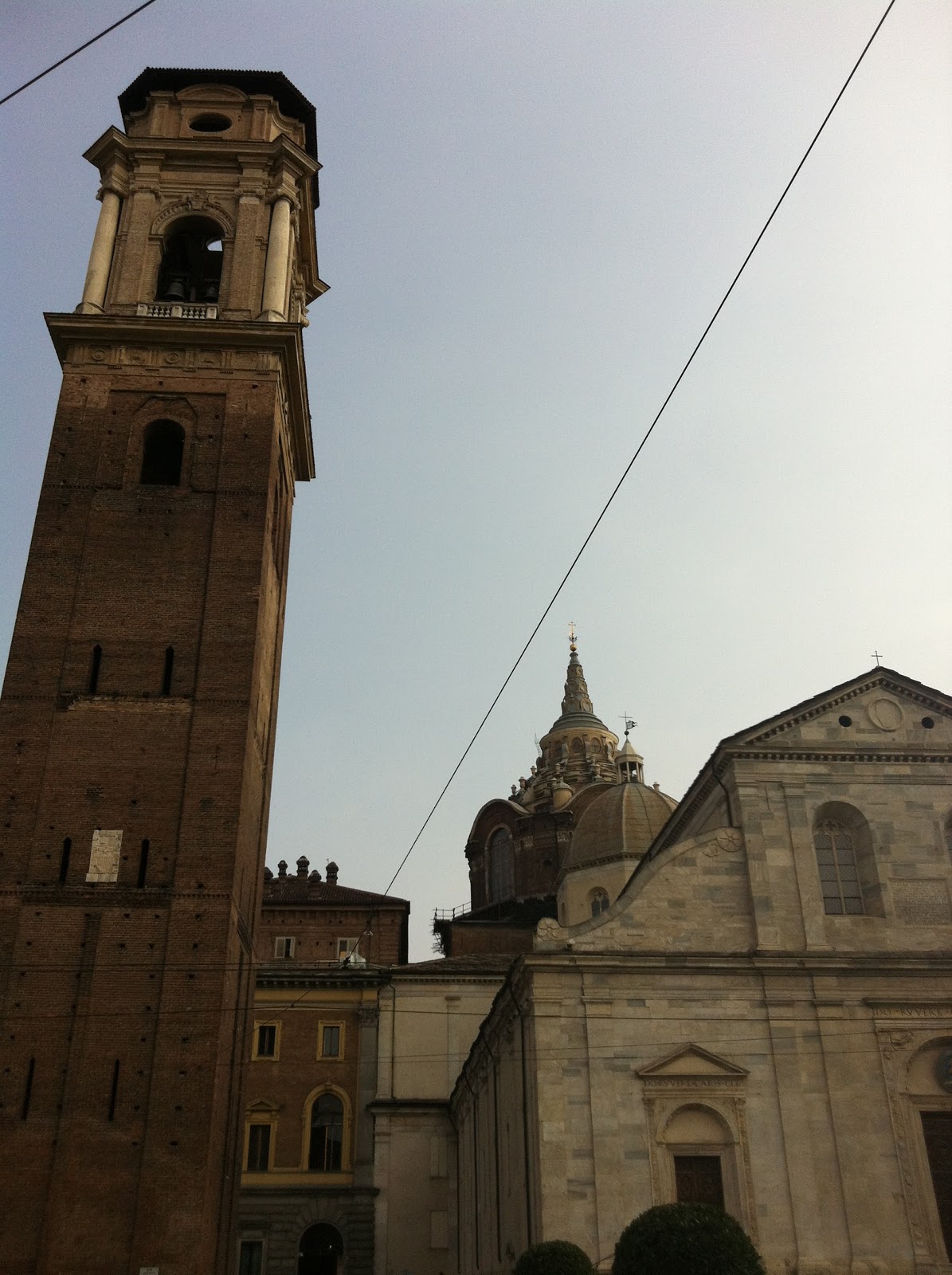
Then onto Torino which quickly rose the ranks into my favorite cities.   It felt so good to slip into the anonymous rhythm of a new place and walk and walk listening to music.  


I loved everything about it; the ring of cafes around the main square, the quiet streets lined by soot-covered apartment buildings, and the beautiful silent river. 


On the way back home from Italy I stopped in Eindhoven and Amsterdam (and crossed paths with my Manny).


It's funny how much both cities are starting to feel comfortable and familiar.  


Maybe it's not being in nature I love, but rather beautiful surroundings and some time and space to reflect and allow feelings to start coming through.  I would say "there's no place like home," but that's only a piece of it.  There's nothing like seeing your home with fresh eyes and a fresh heart, knowing the world is very small, very lovely, very bittersweet. 

Sunday, August 19, 2012

Ordinary Days

What more can we dream
than days of little substance,
sudden laughter and burnt rice, 
the comfort of familiar hands.

What more can be gained 
than life's small irritations,
the last, best day of stillness, 
cool bodies under cotton sheets

Dreaming, perhaps, of what will soon 
be lost.  And it goes so quickly-- 
a glass falling from soapy hands, 
yarn unraveling across the floor.

What more can we do, then, 
but fall headfirst into night,
finding our way from numbness 
to somewhere darker, where air 

separates from lungs and 
sound separates from grief.
Did laughter ever come freely,
will we we wake from this dream.

What more can we bear 
than these new ordinary days, 
split seams rejoined but not intact, 
fear yielding ever deeper love.

My heart sings in recognition 
of all that surrounds me.


Tuesday, July 24, 2012

PAM- July 2012

I've been a member of the Portland Art Museum for years, and I try to catch every exhibit that comes through.  If you haven't visited before, the PAM does a fabulous job selecting themes or artists for their shows, and they integrate a lot of social, cultural, and historical background to add context to the experience.

The headlining exhibit recently was California Impressionism, which I didn't realize was a genre, but the state's landscape is a fitting application for Impressionism's focus on light, space, and motion.  California is such a special place to me, with memories of early childhood in the Bay Area, time on my grandparent's ranch, and visits with my beloved Alice, so the collection evoked a lot of nostalgia, particularly the pieces depicting Northern Californian landscapes of knotty oak and tufts of green and lilac shrubs.


I though the artists were particularly successful in capturing the violet, melancholy shadows in the eucalyptus forests, and I can feel twilight falling over the hills beyond.  This piece below really reminded me of my grandparent's ranch.


My surprise love of the day was an exhibit by Ellsworth Kelley.  He is best known for strong colors and color block themes, but I thought the below series of fruit and vegetable lithographs were fantastic.  


My favorites were lemon and cala lilly.  They are almost a take on still life, but so simple that they really capture the essence of the plants.


The third exhibit was Amanda Snyder, who was a Northwest artist that seems a bit of a chameleon in her work... I never would have known the below pieces were by the same artist.  I liked her energetic interpretation of zinnias, but the clown was scary!


Not So Far


What happens to all that has been misplaced?
Sand abandoned in the pockets of clothes,
Not so much memories, but the presence we know
The arc of her arm, half finished songs
Lilting in the shadows of the world we found.

Childhood was flinging ourselves at whatever
Came to mind- lions, miles, spoken lines,
Our scribbled trail so hard to trace, pushed
By wind-driven tides that gather and part,
Our footprints falling beneath the waves.

Can they be far, these orphaned things?  Can we
Weave them back together like seams of a kite
Caught by the wind and unfurled for safekeeping,
An inverted anchor pulling towards the sky,
Our brokenness singing above the beach.

When the time comes, it won't be hard to find.
We know it's waving, the kite extending from her arms
To ours.  It's not so far, no time has passed,
We are safe- just waiting for it to fall,
For all that's suspended between sand and sky.

- June 2012